Resources
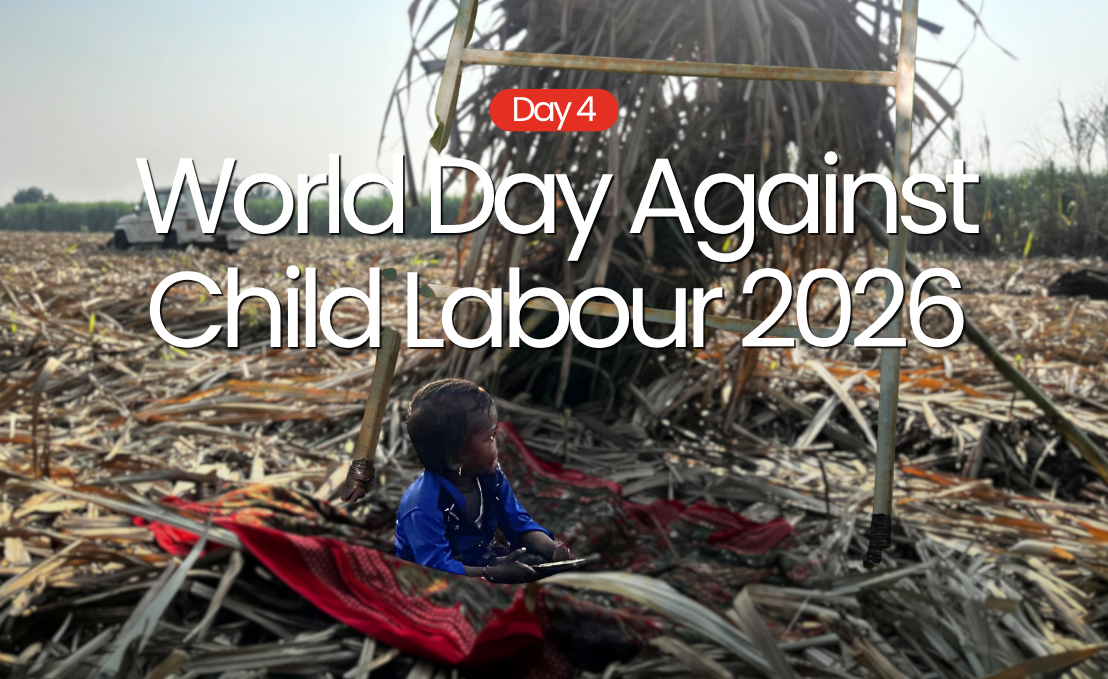
A child leaves their home in rural Cambodia because there are no realistic work opportunities left in the village. Months later, they cross the border into Thailand through informal migration channels, in search of work. Somewhere along that journey, the risks multiply: debt, exploitation, trafficking, unsafe work and disappearance from protection systems entirely.
None of this begins with a single dramatic moment. It begins much earlier, inside supply chains and communities where economic pressure accumulates until people run out of choices.
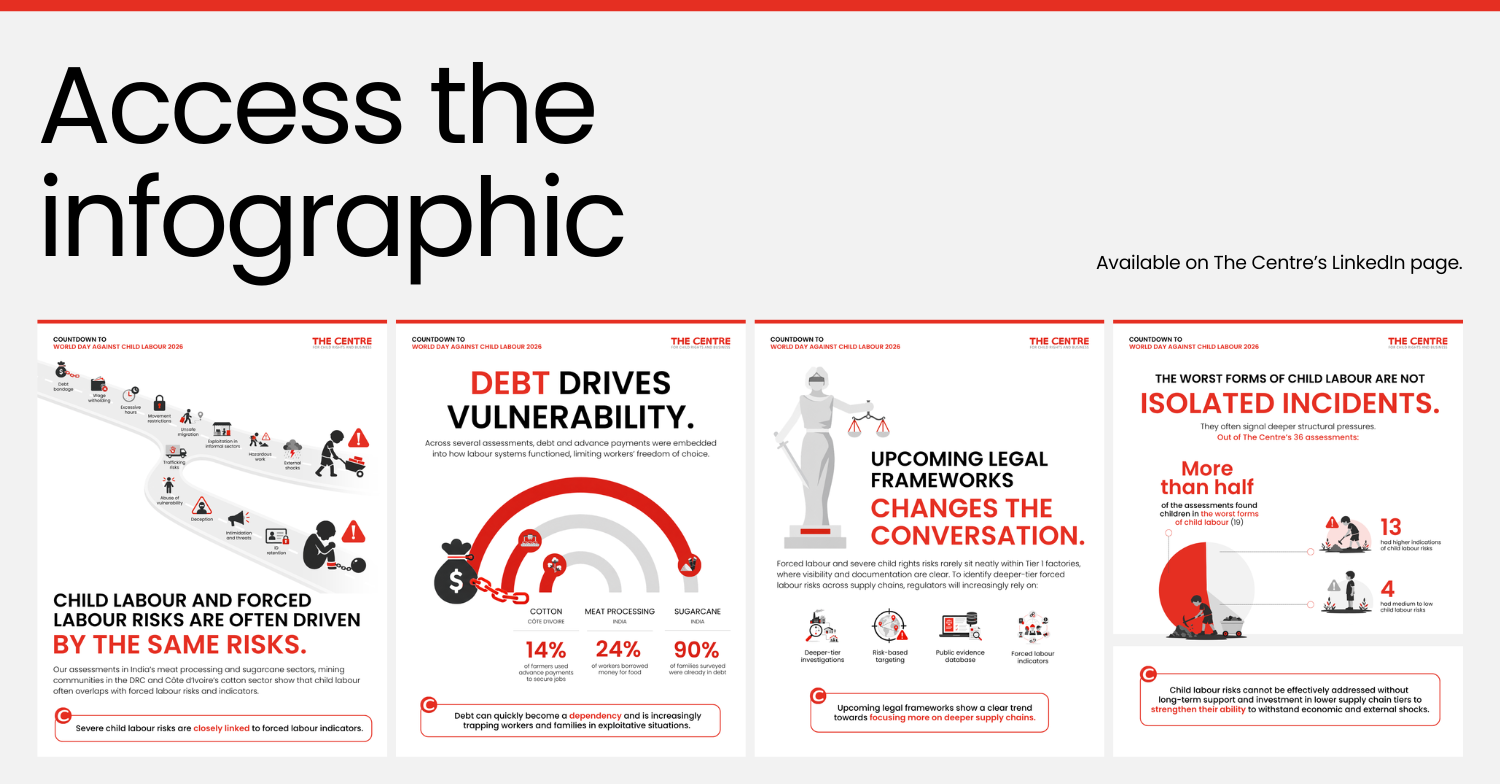
Of the 36 assessments reviewed, 19 identified the worst forms of child labour, 13 identified a high risk of child labour and only four found minimal child labour risks.
During an assessment in Cambodia’s rice sector that covered three smallholder farms and three village communities, for example, we observed that migration had become a major survival strategy for farming communities facing unstable livelihoods and limited local employment. Village leaders described entire communities gradually hollowing out as adults and young people leave in search of work elsewhere.

“Currently, around 20 villagers have migrated from our community to find work in other provinces or Thailand,” one village chief with a population of 1,400 told us.

For many families, migration is no longer viewed as a temporary opportunity but as an economic necessity. Children become deeply exposed to these dynamics. Some migrate alongside parents. Others remain behind with grandparents while adults travel seasonally for work. Language barriers when migrating abroad can interrupt education for migrant children altogether. Once migration happens through informal channels, the risks can escalate rapidly. Families described relying on informal brokers because formal migration pathways were expensive, slow and inaccessible.
Exploitation can emerge at every stage of the process in the form of debt bondage, trafficking, wage withholding, hazardous work, or coercion disguised as survival.
In India’s meat processing sector, our assessments in three meat processing plants revealed how factories relied heavily on labour contractors and subcontractors to recruit and manage workers. The workforce was overwhelmingly young, with 90% of surveyed workers under 35. Many workers had little formal education and few realistic alternatives beyond accepting whatever work was available.
Workers in India described labour systems in which subcontractors handled recruitment, supervision and payroll, while factories maintained limited direct oversight as long as production targets were met. Outside inspection periods, workers often operated informally and off the books. Several workers reported withheld identity documents. Many lacked written contracts, wage records, insurance coverage or accessible grievance systems.
At the same time, debt had become embedded in daily survival. One in four surveyed workers reported borrowing money within the previous year, often simply to afford food, healthcare or other basic expenses. Advance payments from labour agents were a common practice.
While these conditions may not always meet the strict legal definition of forced labour, they consistently create situations of vulnerability and dependency. Workers become reliant on labour intermediaries, trapped in unstable income cycles, and increasingly unable to challenge abusive conditions or leave exploitative employment. When such circumstances are combined with even a limited degree of involuntariness, they can quickly meet the threshold of forced labour.
Recent regulatory developments reinforce the urgency of addressing these risks. The USA Child and Forced Labour ban and the EU Forced Labour Regulation (EUFLR) place strong emphasis on preventing products made with forced labour from entering the market. Although there are legitimate concerns that these measures may at times function more as trade instruments than as tools for systemic change—with insufficient focus on supply chain investment and meaningful remediation—they are nonetheless a regulatory reality. Companies must therefore take them into account, as they significantly increase the pressure to identify, prevent and address forced and child labour risks in their operations and supply chains.
Too often, businesses still approach forced labour risks as isolated supplier failures or criminal outliers. But what we continue to observe is something far more systemic: supply chains where pressure, instability and cost-cutting are routinely borne by the people with the least power to withstand them.
And behind every risk indicator sits a human story. A young worker accepting dangerous work because there are no decent alternatives nearby, and after accepting upfront payments, being trapped in a situation of bonded labour, unable to leave the work they signed up for. A family migrating across borders because farming can no longer sustain them, realising too late that their illegal status now makes them entirely dependent on their labour agent. A worker borrowing money simply to buy food while falling deeper into debt dependency. A child dropping out of school because parents have to prioritise debt repayment over school fees.
These realities are not separate from supply chain systems. They are produced within them. Preventing the worst forms of child labour and forced labour, therefore, requires businesses to understand where vulnerability concentrates within their supply chains and invest far more seriously in preventing exploitation before it escalates.
View the full infographic on The Centre's LinkedIn page →

By using this website, you agree to our use of cookies. We use cookies to provide you with a great experience and to help our website run effectively.





